8 min read
Non-surgical body contouring: what cryolipolysis, HIFU and radiofrequency really do
A partial reduction of a localised bulge, a slight improvement in firmness: non-surgical body contouring has a narrow remit. Knowing it saves you a course of pointless sessions.
By Dr. Achraf Daoud · Published on
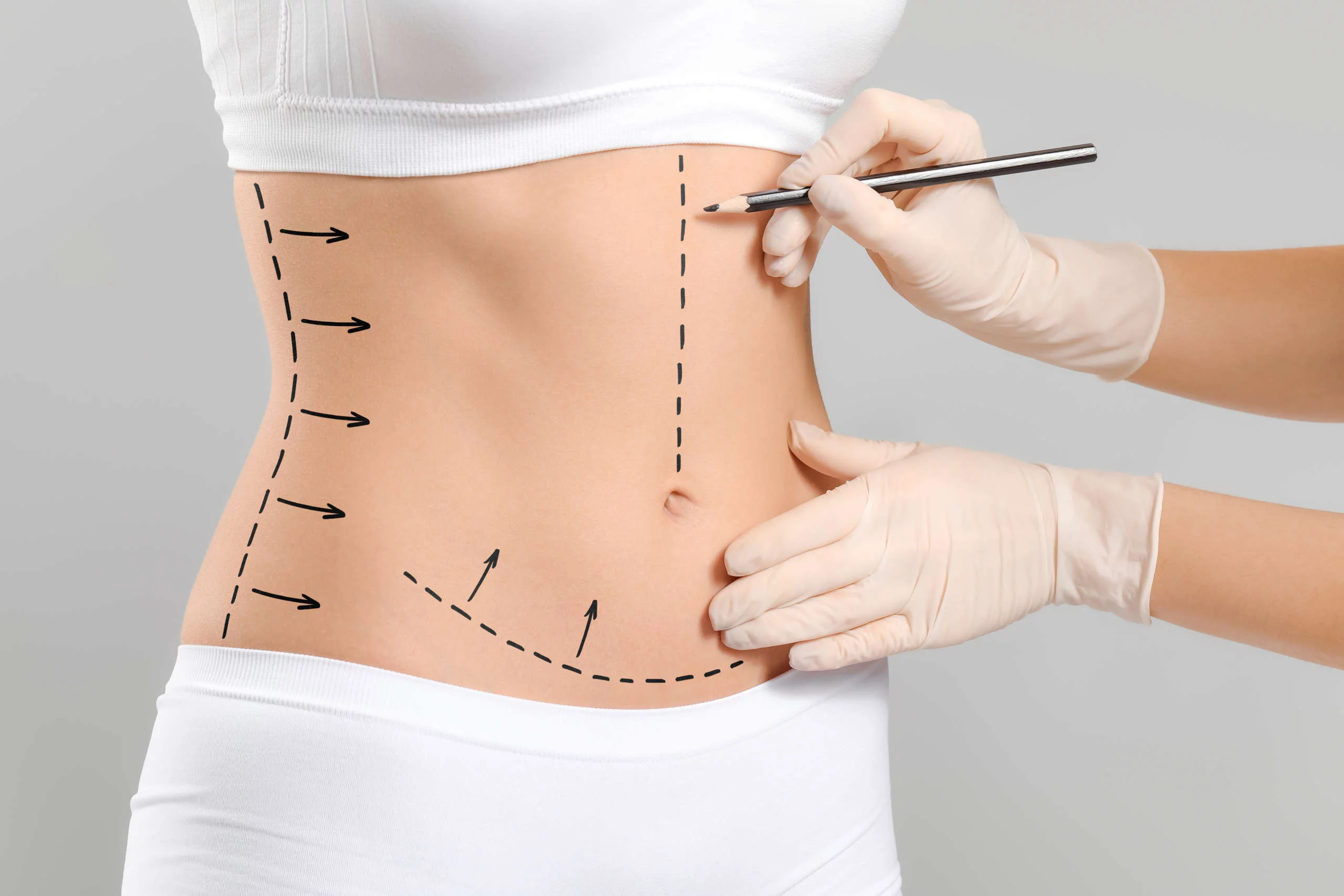
Non-surgical body contouring covers techniques that aim to reduce a localised fat excess or improve skin firmness, with no incision and no anaesthesia. They are adjunct treatments: they act on moderate defects, over repeated sessions, with a partial result.
None of them is a weight-loss method, and none replaces liposculpture where the excess is significant. Put plainly, they refine a silhouette that is already close to its target, they do not transform one.
The four families of techniques
Cryolipolysis
An applicator draws in a bulge and cools it to a low temperature for roughly 35 to 60 minutes. Fat cells, more sensitive to cold than skin, are damaged and then cleared gradually by the body over two to three months.
The reduction achieved in the treated area is partial and variable, and one to three sessions per area are usually needed. The right indication is a well-localised bulge that the applicator can grasp, in a person of stable weight. After-effects include redness, numbness and sometimes transient neuropathic pain for a few weeks.
High-intensity focused ultrasound
HIFU delivers energy deep at a precise point, producing targeted heating. Depending on the depth setting, the intended effect is either destruction of fat cells or retraction of the supporting tissue. The improvement in firmness is real but subtle, and builds over two to three months.
Radiofrequency
Radiofrequency heats the dermis to stimulate collagen. It is used for a slight improvement in firmness and skin appearance, on the abdomen, the arms or the inner thighs. It requires repeated sessions and its moderate effect needs maintaining. It does not remove skin and does not treat significant laxity.
Lipolytic injections
These involve injecting a product into the fat to break it down, over small areas such as under the chin. After-effects include sometimes marked swelling, tenderness and temporary nodules. Several sessions are needed and the result stays moderate. The regulatory status of the products used varies by country, which should be checked before any treatment.

Non-surgical or liposculpture: how to decide
| Criterion | Non-surgical techniques | Surgical liposculpture |
|---|---|---|
| Volume of fat treatable | Small, a localised bulge | Large, several areas in one procedure |
| Number of sessions | Several, spaced out, per area | One procedure, occasionally a touch-up |
| Result | Partial and variable between individuals | Marked and predictable in a suitable candidate |
| Timeline | 2 to 3 months after each session | 3 to 6 months, the time for swelling and retraction |
| Recovery | Immediate return to normal activity | Compression garment, time off from a few days to 2 weeks |
| Anaesthesia | None | Deep local or general, depending on the extent |
The reasoning is simple: if you can grasp a small isolated bulge, your weight is stable and you accept a partial result, non-surgical techniques make sense. If the excess is significant, if it involves several areas, or if you expect a clear change in silhouette, stacking up sessions means spending time and money on a result that will not come.
The question of skin
This is the limiting factor most often underestimated. Removing fat, by whatever method, requires skin that is able to retract. After major weight loss, a pregnancy, or with age, skin can be stretched to the point where no contouring technique will give a satisfactory result.
In that situation, the procedures that genuinely remove skin, abdominoplasty, body lift, arm or thigh lift, are the only ones that bring a change. A consultation is where you get a straight answer on whether your skin allows a non-surgical approach.
What none of these techniques does
- Make you lose weight: weight loss comes from diet and physical activity, not from a machine.
- Treat cellulite at depth: the dimpled appearance depends on fibrous septae, which respond poorly to these techniques.
- Remove excess skin, whatever the intensity or the number of sessions.
- Guarantee a figure: the percentage reductions quoted are study averages, not an individual promise.
- Remove the need for a stable weight: regaining weight erases the benefit obtained.

Frequently asked questions
Does cryolipolysis actually make you lose weight?
No. It partially reduces a localised bulge in the area treated, but it has no effect on weight. It is aimed at people of stable weight who keep a localised excess despite diet and exercise, not at a request for weight loss.
How many cryolipolysis sessions are needed?
One to three sessions per area are usually needed, spaced several weeks apart. The result builds gradually over two to three months after each session, and it remains partial and variable from one person to another.
Cryolipolysis or liposuction: which should I choose?
Cryolipolysis suits a small isolated bulge in a person of stable weight who accepts a partial result without anaesthesia. Liposculpture is the answer when the excess is significant, involves several areas, or when a clear change in silhouette is expected. The clinical examination settles it.
Do these techniques tighten stretched skin?
They can slightly improve firmness in skin that is only mildly lax, but they do not remove skin. After major weight loss or a pregnancy, genuine excess skin only responds to surgical procedures that remove it, such as abdominoplasty or a body lift.